Structured cabling for New York City offices
Innovatica installs structured cabling for commercial offices, from desk outlets to fiber backbones between floors. We certify Cat6 and Cat6A copper links and test fiber against the project's optical loss limits. Your IT team receives the results by cable ID.
What goes into the cabling bid
For a Division 27 bid, send the telecommunications drawings and specifications with the architectural floor plan. We coordinate with the general contractor and electrician on who provides conduit, sleeves and firestopping before we price the cable routes.
- Cat6 and Cat6A data drops
- We count the cables serving each workstation, conference table, wireless access point and camera. Where cables run through furniture, we check the feed point on the furniture plan and schedule termination after the desks are in place.
- Fiber backbones between telecom rooms
- We trace the proposed route from the main telecom room (MDF) to each floor closet (IDF). Before pricing the backbone, we confirm the fiber type, strand count and connector type with IT and check riser access with building management.
- Racks and patch panels
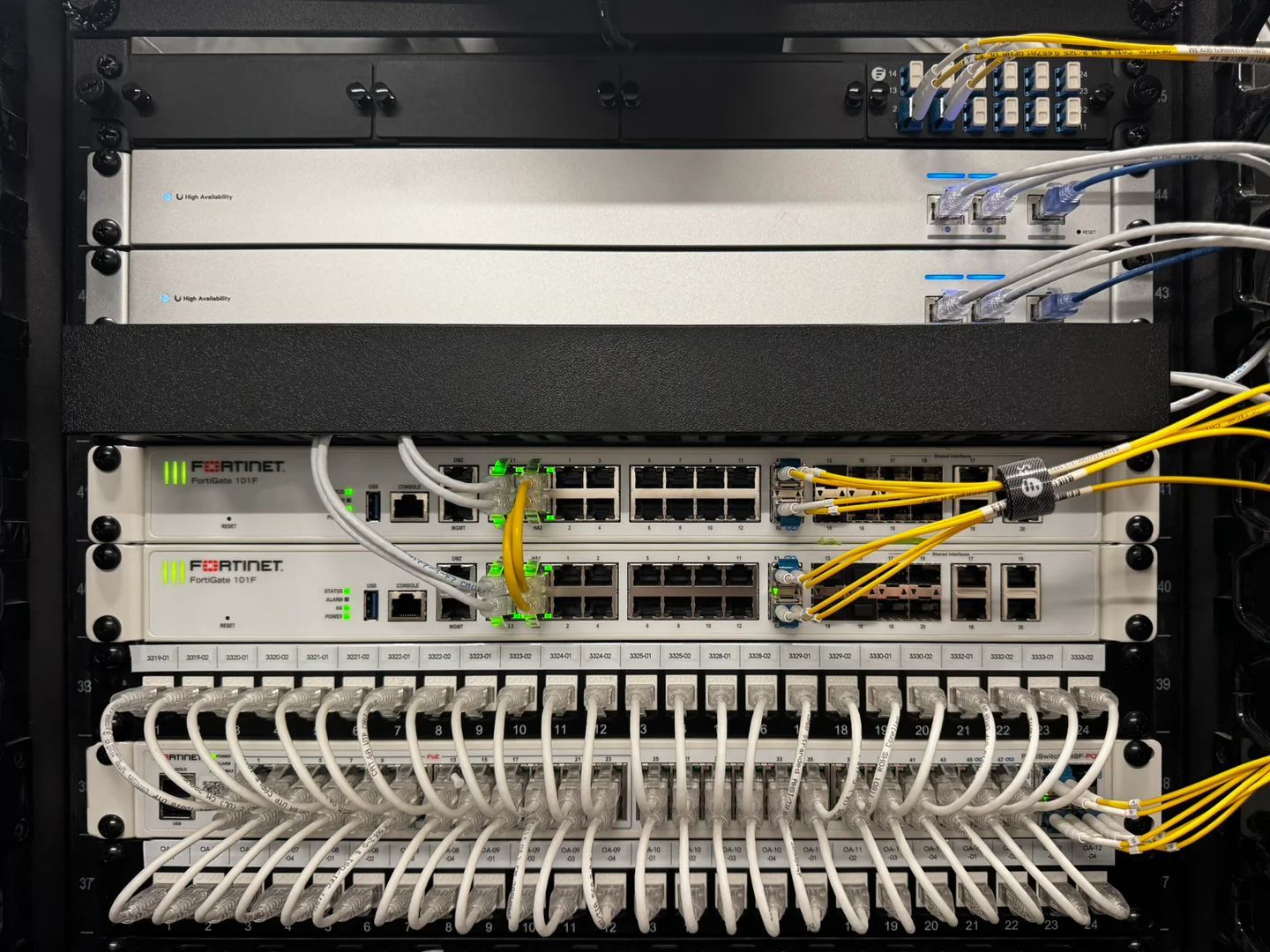
- We use the drop count to size patch panels in each closet. We check available rack space and cable entry with IT, then agree where to leave room for switches, cable managers and future ports.
Labeling, testing and closeout
Set the outlet IDs before rough-in
We mark each outlet on the floor plan and assign it a closet, panel and port. The installer labels both ends of the run with the same ID. If an outlet moves during construction, we update the plan.
Certify copper links and test fiber
For a jack at a desk, we certify the permanent link from the patch panel to the jack with a TREND Networks LanTEK IV using the specified Cat6 or Cat6A test limit. For fiber, we verify polarity and measure end-to-end insertion loss at the specified wavelengths. When the project calls for OTDR traces, we include them so IT can locate splices and connectors along the route.
Hand over results IT can look up
The closeout package pairs the port schedule and marked-up plans with the agreed test reports. When IT patches a desk, the outlet label tells them which panel port to use and which test result belongs to that run.
How many drops does a 24-desk office need?
If each desk needs two wired ports, the desks account for 48 runs. Add one run for each of four wireless access points and two printers and the takeoff comes to 54 runs. Those runs need 54 patch-panel ports across the serving closets. Count conference rooms, cameras and spare ports separately if your plan calls for them.
If the access point locations are still provisional, a Wi-Fi site survey can establish where the crew should pull those cables before the ceiling closes.
Cabling questions before bid day
What affects the price per drop?
Cable category, distance to the closet and access to the ceiling all affect the installed price. On an occupied floor, tell us which rooms must stay open and when the crew can work overhead. Ask for rack work and shared fiber backbones as separate line items when comparing bids.
Can we reuse the cabling in an office we are taking over?
We trace existing outlets to the closet, inspect their terminations and test them against the requirements for the new equipment. That gives you a list of runs you can keep, runs that need a repair and locations that need new cable.
What if IT is supplying the network switches?
Send the switch models or port counts and identify who will mount, patch and configure them. We use that information to coordinate rack space and patch cords and to show where our installation ends and your IT team's cutover work begins.
Get a cabling estimate
Send your floor plan, project address and bid or move-in date to our estimating team. If drawings are still in progress, the desk count, closet locations and building access hours are enough to start a budget estimate.